Bangkok's Chinatown: How to visit Yaowarat and enjoy Thailand's most famous street food
Visit Bangkok's Chinatown It's one of the most intense and authentic experiences you can have in Thailand's capital. This historic neighborhood, known for its main street, is a must-see. Yaowarat, It combines Chinese tradition, street food and the unmistakable chaos of Bangkok in one place.
Chinatown has two very distinct faces. During the day, the area is dominated by gold shops, traditional Chinese medicine stores, and markets selling spices, nuts, and products that are hard to find in other neighborhoods. However, it is at dusk that Yaowarat transforms completely and reveals its most vibrant side.
VIDEO IN ENGLISH
VIDEO IN SPANISH
The origin of Chinatown and the Golden Buddha
Bangkok's Chinatown originated in the late 18th century when King Rama I decided to relocate the Chinese community to this area after the construction of the Grand Palace. Over time, Chinese merchants built temples, markets, and businesses, eventually shaping one of the most vibrant districts in all of Asia.

At the entrance to Chinatown is the Wat Traimit, Famous for housing the Golden Buddha. This massive statue, weighing over five tons, remained hidden for centuries under a layer of plaster to prevent looting. It was discovered by accident in the 1950s, becoming a perfect symbol of the neighborhood: wealth and history hidden beneath the passage of time.
What is the best time to visit Chinatown
Access is easy: you can take the MRT to Hua Lamphong, a taxi, or use apps like Bolt. From there, the walk to the heart of Chinatown becomes a gradual transition into the controlled chaos that characterizes the neighborhood at night.
Yaowarat: the epicenter of street food in Bangkok
Yaowarat Street is the main thoroughfare of the neighborhood. Its curved layout, which from the air resembles the body of a dragon, is symbolically associated with prosperity and wealth in Chinese culture. Walking along this avenue is like strolling through one of Thailand's largest showcases of street food.

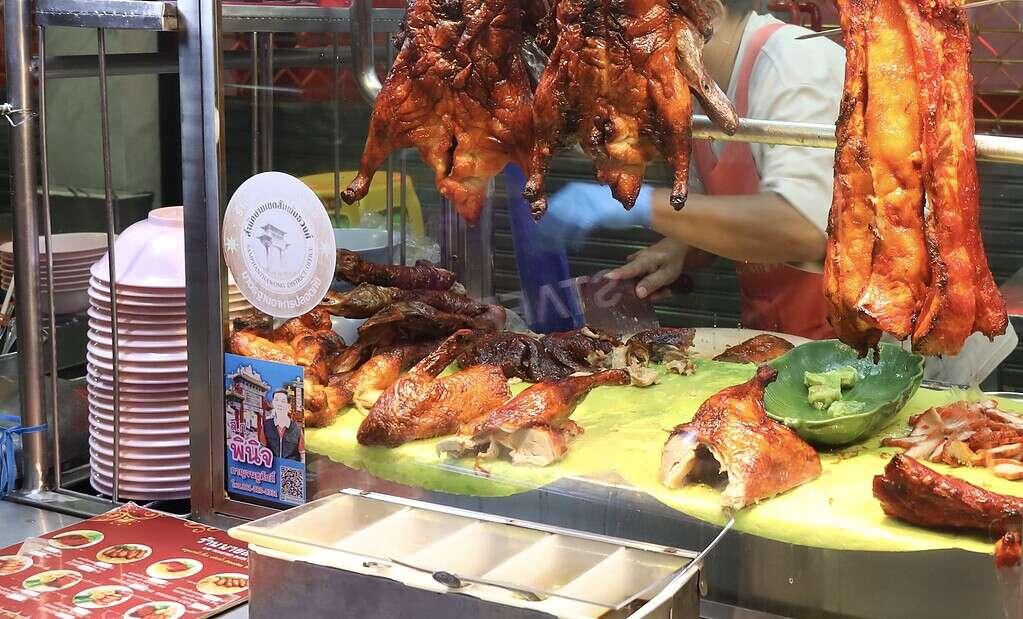
Here you'll find grilled squid, freshly prepared dim sum, chive fritters, roasted chestnuts, tropical fruits, pomegranate juice, Peking ducks hanging in glass cases, and curious products like edible bird's nests, considered a luxury delicacy in Chinese tradition.

Where to eat in Chinatown: Lek Seafood and other classics
Among the most well-known restaurants, the following stand out: Lek Seafood, one of the most emblematic places in Yaowarat.
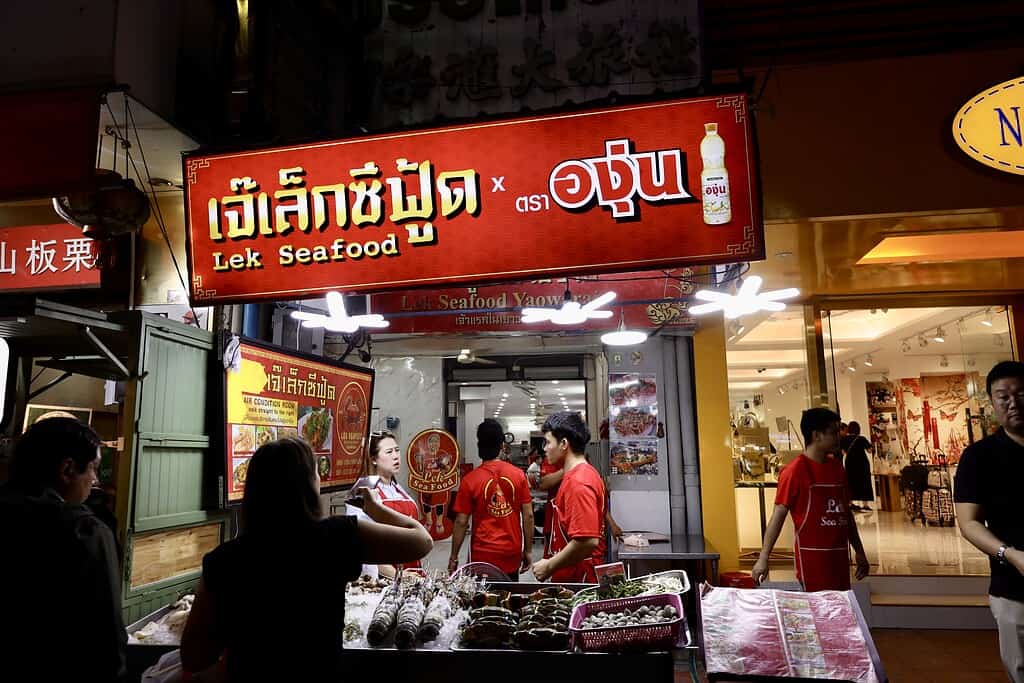
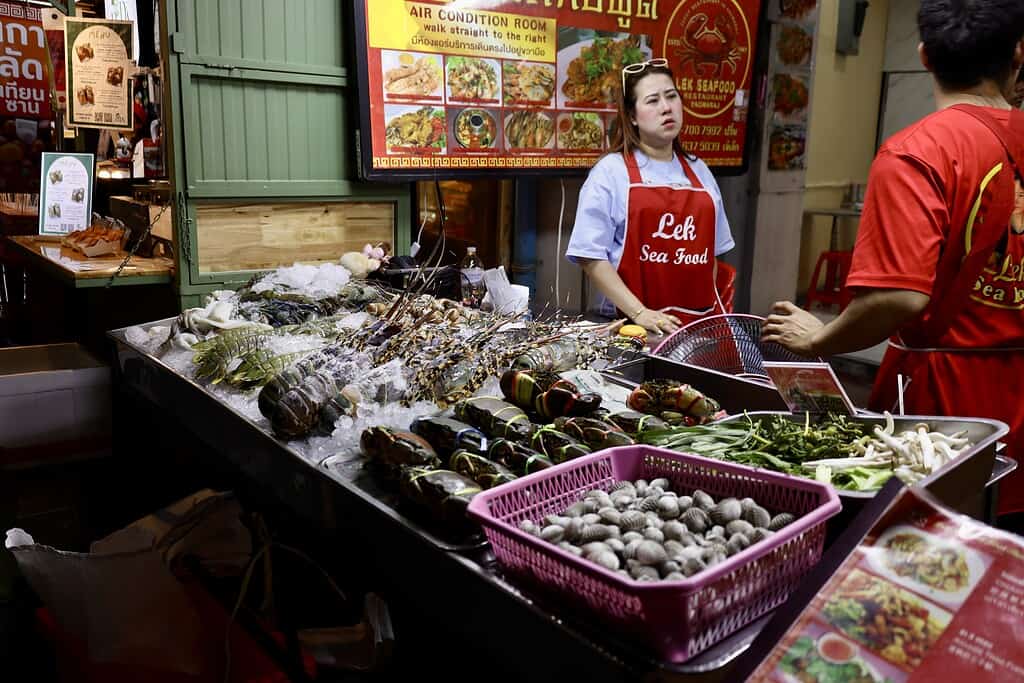
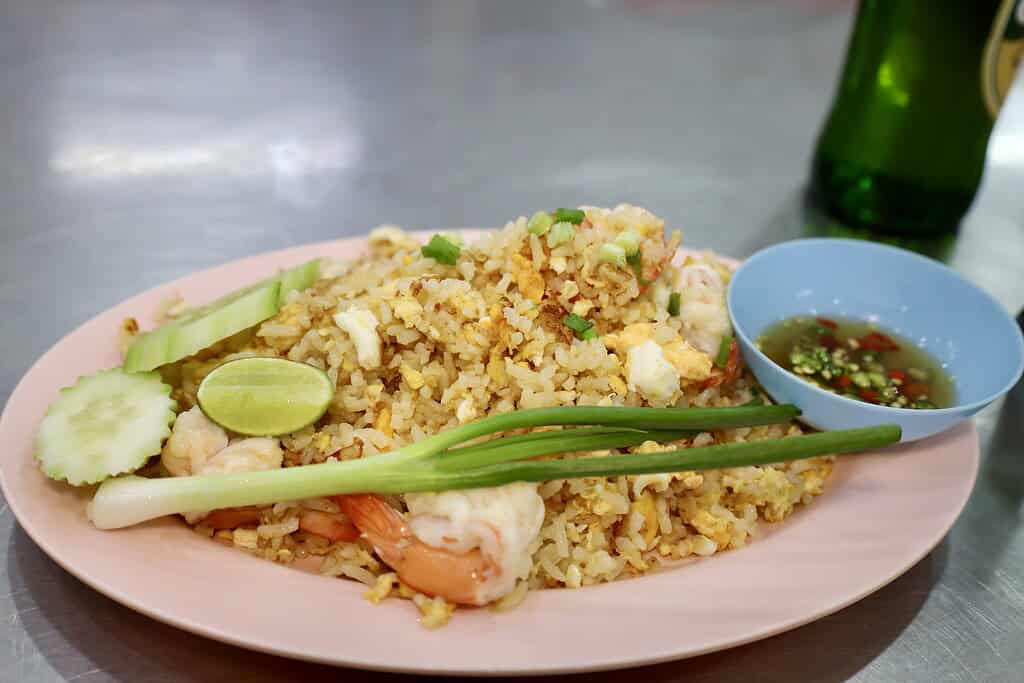
Always packed and with the stoves constantly going, it's famous for its fresh seafood. Dishes like crab curry with egg or fried rice with prawns perfectly represent the fusion between Thai cuisine and Chinese tradition.
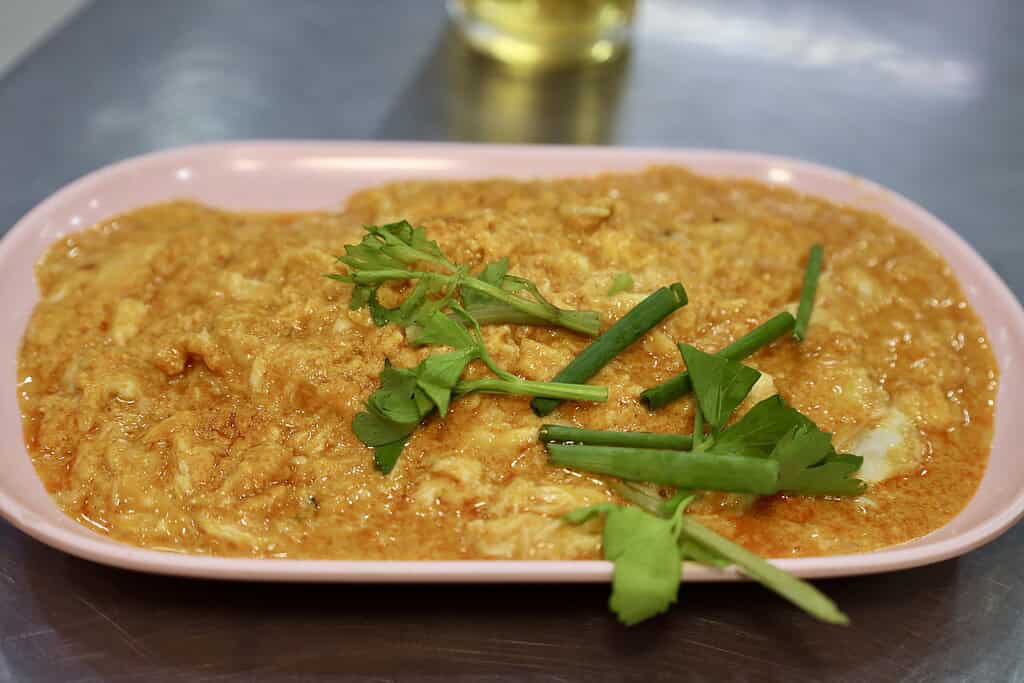
Other legendary venues, such as Nai-Ek Roll Noodles, They are usually completely packed, which demonstrates the enormous gastronomic popularity of Chinatown.
A multicultural experience that will not be forgotten
Unlike other markets in Thailand, Chinatown is a melting pot of locals and travelers from all over the world, creating a unique multicultural atmosphere. The constant traffic, tuk-tuks, music, smells, and general bustle are all part of the experience.
When you return to the beginning of the street and wait for a taxi, you're left with the feeling of having experienced something intense: new flavors, incredible colors, and an energy that's hard to forget. Chinatown isn't just a place you visit; it's an experience that stays with you.
Prepare your visit to Thailand with our practical advice!! Check our Travel Guides section there you will find from information about visas and transportation to accommodation suggestions, we will provide you with the essential information to plan your adventure.